

"People Think It Was Professionally Done"
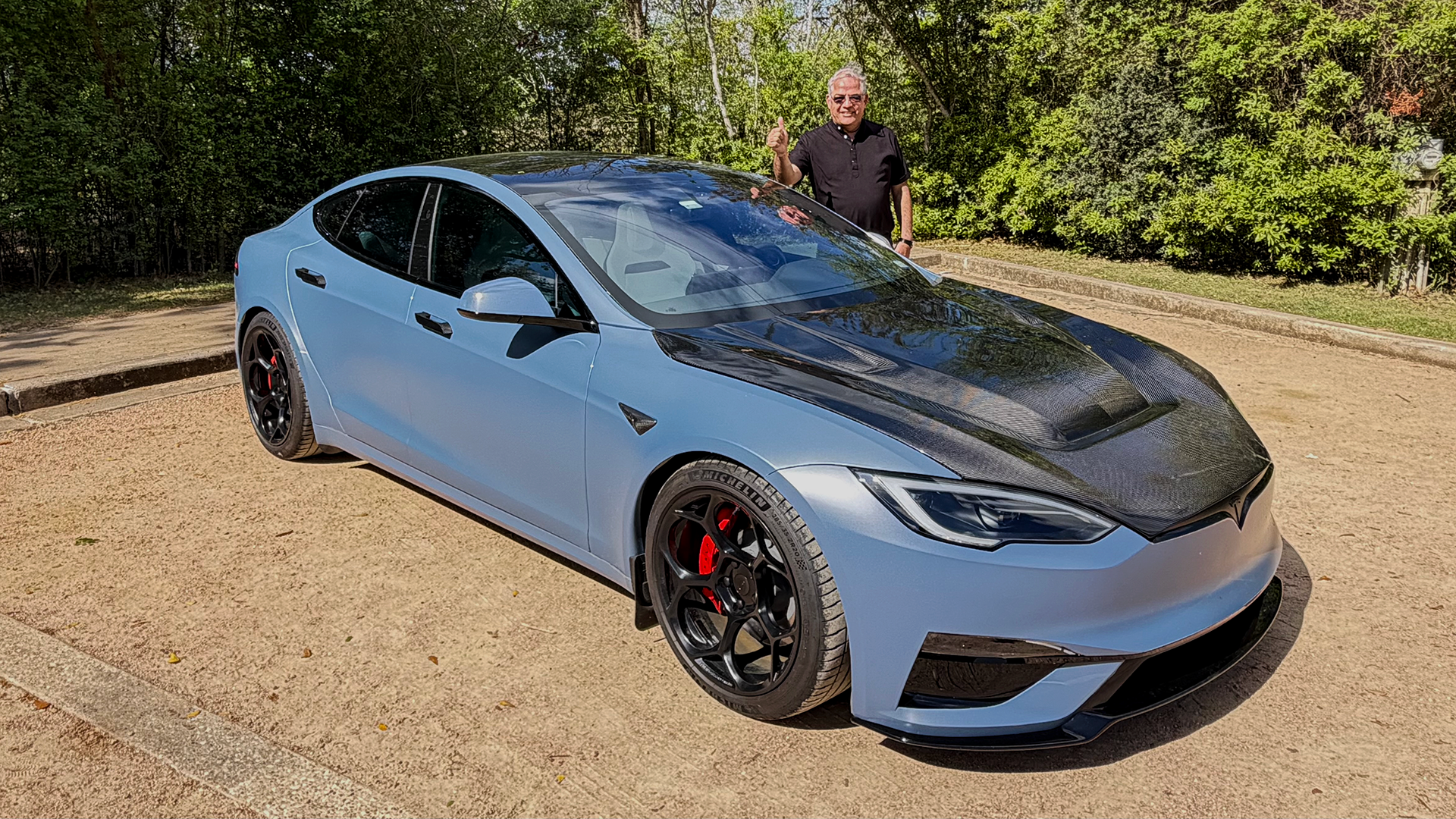
Andreas drove his 2026 Tesla Model S Plaid out to meet us in Houston. Frost Blue, Defense+ Matte all over, and a custom gloss hood that stops people in their tracks. We talked retirement cars, therapy, and why a $15,000 shop quote sent him straight to DIY.
That hood is getting a lot of attention. What's going on there?
I wanted to make the car a little unique, so I found a hood with some contours in it. The rest of the car has the matte PPF, but the hood stays shiny so you get that contrast between gloss and matte. People love it because it looks like a continuation of the glass roof flowing down over the hood. That's exactly the effect I was going for.
This is a serious car, over $200,000 Canadian with tariffs. Why did you decide to do the PPF yourself instead of taking it to a professional?
This is my retirement car. When it's paid off, I'll have free supercharging for life with the deluxe package, so I wanted to protect it properly. I'd heard that Tesla paint is thin so PPF wasn't optional. But when I started getting quotes, professionals were charging anywhere from $6,000 to $15,000. In California they quoted me $15,000. So I started looking around and found Drive Protected with the pre-cut patterns. I wanted matte, and luckily they'd just started offering it. Matte changes the whole appearance of the car, gloss preserves that factory shine, but matte gives it something different. And the hydrophobic properties mean it's easy to clean, which at my age matters. I don't want to be out there scrubbing.
Talk me through how you approached the install. How long did it take?
Working every day, all in one stretch, I'd say about three days. In reality I did it in stages, but three days seems about right for a full car. I started with books, that's my only prior experience with anything like this. Wrapping school books with contact paper to avoid bubbles. Cars are a different story because nothing is flat. Except maybe a Cybertruck. The pre-cut pieces made a huge difference. With bulk film you're cutting, managing edges, worrying about everything tangling. Having it pre-cut means you're handling manageable pieces and just focusing on the install. And the kit tells you how to separate the pieces, which helps a lot.
Where did you start?
The hood, which Eric's videos recommended as the starting point for a flat surface. He was right, the hood went up really clean and it gave me confidence to move on to the harder pieces. After that I did the fenders, making sure the turn signals lined up. Then the doors, which are almost flat and very manageable. The A-pillars were actually one of the easier pieces. They come pre-cut thin, and you just tuck the excess in between the glass and the car.
Any interesting decisions you made along the way?
On the rear fenders, the Model S actually comes with some factory PPF from Tesla on those flared sections. I left it in place and installed Defense+ on top. So now I've got double protection on an area that takes a lot of rock damage. Double the thickness, double the coverage. That area really attracts hits on the Model S because of how far those fenders flare out toward the rear wheels.
What were the hardest panels?
The bumpers, front and rear. They have a lot of creases and curves to work around. After that, the mirrors because of the curvature. Though in my case, I'm putting carbon fiber mirror caps on, so that actually saves me a few steps there.
People are stopping you at car meets?
Yes. People ask who did my wrap and they think it was professionally done. It's my first time. That reaction means a lot. And now they want to know about doing it on their own cars, the savings get people's attention fast.
You mentioned it's like therapy for you.
I work on computers, so doing something with my hands lets my brain rest. I'm using the other side, the artistic side. It's a good balance. Eric mentioned some customers do it with their spouse and end up needing actual therapy afterward, which I thought was very funny.
Final thoughts, would you recommend this to other Tesla owners?
Absolutely. And my recommendation is to go full wrap if you can. With partial wraps you can end up with dust collecting along the edges. Full wrap and you don't have to think about it. That said, Drive Protected sells in panels, so you can absolutely start with just the front end and come back later as your budget and comfort level grow. You don't have to do it all at once.
After doing one car, you feel so happy and so empowered that you want to do it again. When I get bored of this color, I'll probably do orange next. That's how it goes.
Share:
New LFP Battery in the Giveaway Tesla. Real Range & Degradation Results
Who Won the Model 3? (Plus What It Really Cost Us)